
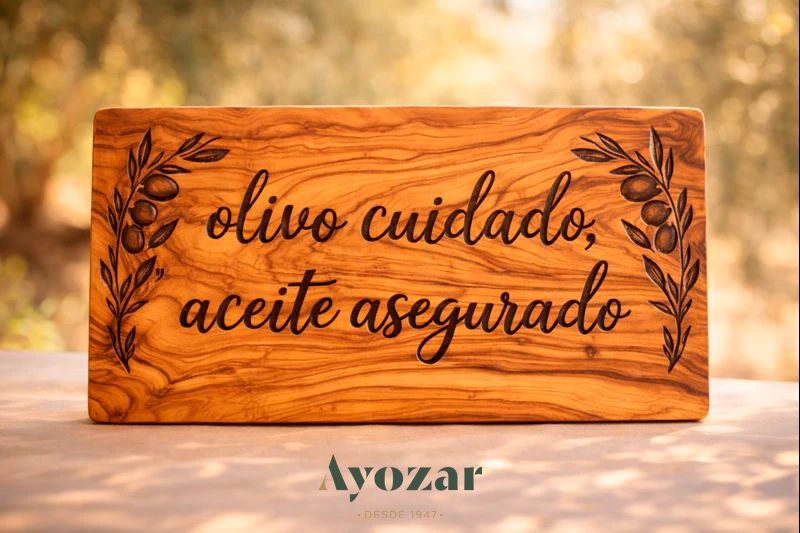
The Spanish proverb is an authentic archive of collective memory. Through short, rhythmic and easy-to-remember phrases, the people condensed their life experience for centuries, especially linked to the rural world. Among all the natural elements present in these sayings and phrases, The olive tree stands out as one of the most recurrent and loaded with symbolism., a reflection of its enormous importance in the economic, social and cultural life of large areas of Spain.
The olive tree is much more than a fruit tree. It represents permanence, patience and sustained effort over time.. Therefore, it is not surprising that it appears in numerous proverbs that speak both about work in the field and about life itself.
The olive tree and the patience of time
One of the most repeated messages in the proverb related to the olive tree is the need to think long term.. The farmer knows that the olive tree takes years to produce, but also that its longevity compensates for the wait. This is what proverbs like:
“He who plants olive trees, plants for his children.”
o
“Late olive tree, a lot of good oil has given birth.”
Both insist on the idea that the benefit of the olive tree is not immediate, but it is lasting. In this same line we find:
“Whoever wants oil, let him wait.”
A simple phrase that can be applied both to the field and to everyday life, where constant effort ends up bearing fruit.
Agricultural proverbs: popular knowledge made into words
He proverb also functioned as an authentic practical guide for agricultural work. Many sayings warn about the importance of caring for the olive tree correctly:
“Poorly dug olive tree has yielded little oil.”
This saying emphasizes the need to work the land carefully. Others refer to pruning, a fundamental task:
“Pruned olive tree, always improved.”
or, with a warning tone:
“Very pruned olive tree, soon exhausted.”
Experience taught that neither abandonment nor excess were good companions for the olive grove. Balance was—and still is—the key.
The climate and the harvest in the proverb
The weather occupies a central place in the sayings of the olive tree. Rain, cold or excessive heat were carefully observed, since the harvest depended on them:
“Year of snow, year of goods; also for the olive groves.”
“January frost, oil in the barn; April frost, little oil and ruin.”
These sayings show how the peasantry interpreted natural phenomena and anticipated their consequences, transmitting that knowledge orally.
The olive tree as a metaphor for life
In addition to its agricultural dimension, The olive tree becomes a proverb, a metaphor for human values.. Its strength and ability to resist adverse conditions inspire expressions such as:
“Harder than an olive trunk.”
o
“The olive tree endures blows, like the wise man.”
Here the tree symbolizes resistance, experience and the ability to overcome to difficulties, qualities highly valued in rural communities.
Identity and cultural roots
In many olive-growing regions, The olive tree marks the landscape and the rhythm of life. It is not only a source of income, but an element of identity. Hence sayings that reflect pride and belonging:
“Where there are olive trees, there is life.”
o
“Oil, bread and wine walk the way.”
The latter links the olive tree with traditional gastronomy and Mediterranean culture, remembering the importance of olive oil as a basic food and symbol of well-being.
Conclusion
The Spanish proverb and the olive tree form an inseparable alliance. Each saying is a small lesson that talks about patience, work, respect for nature and vision for the future. In a modern society marked by immediacy, these popular sayings continue to be fully valid. Listening to what the proverb tells us about the olive tree is, deep down, listening to the voice of the earth and those who have learned to live in harmony with it.
At Ayozar Oils, we adopt the olive tree culture as part of our way of working: respect for the olive grove, attention to the process and commitment to quality.